


Putting Quality Into Practice
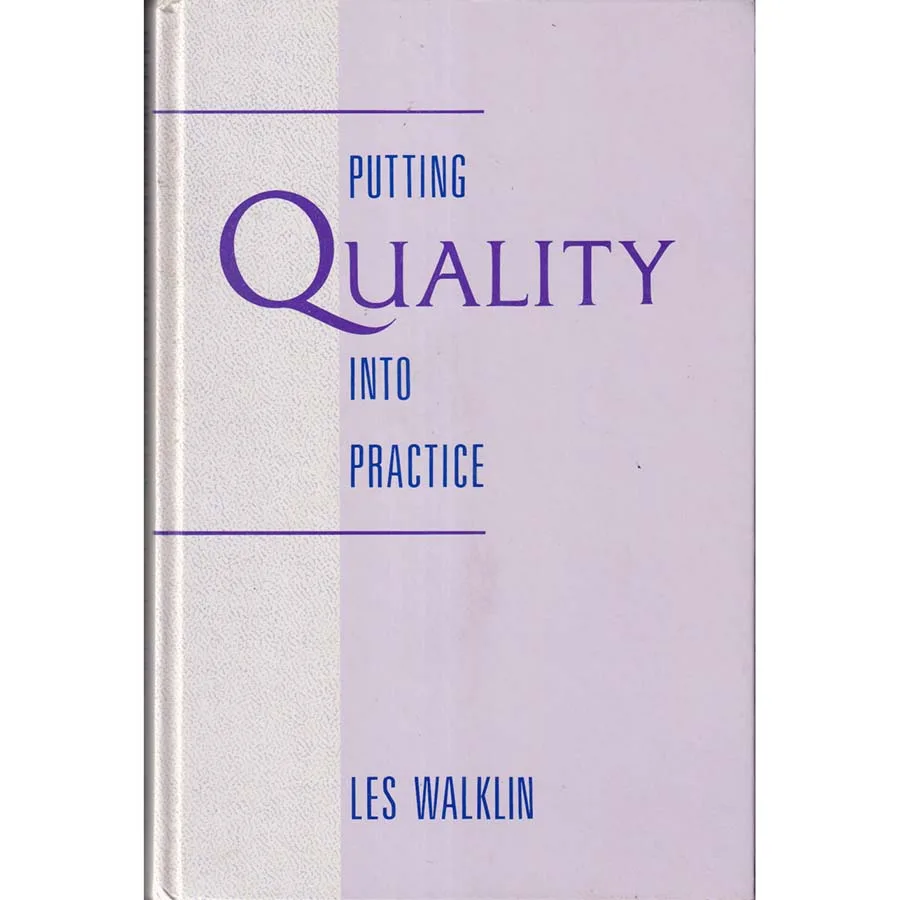
Publisher: Stanley Thornes
Format: Hardback
ISBN: 9780748713608
There are books that explain quality. There are books that discuss quality. And then there is Putting Quality into Practice, which gently points out that quality is only truly impressive when somebody actually does something about it.
Written by Les Walklin and published in 1992 by Stanley Thornes, this practical guide emerged during the great quality revolution that swept through industry, education and business during the late twentieth century. Organisations everywhere were discovering that producing mediocre results and hoping nobody noticed was perhaps not the strongest long-term strategy.
Walklin’s approach is refreshingly direct. Rather than treating quality as an abstract concept to be admired from a distance, he focuses on implementation. After all, anyone can talk about excellence. The challenge begins when people attempt to introduce systems, procedures and improvements without causing complete organisational panic.
The book explores the principles behind quality management and demonstrates how they can be applied in real-world situations. Readers encounter ideas about continuous improvement, standards, measurement and organisational effectiveness. In other words, all the things that businesses promise enthusiastically in brochures and then spend years trying to achieve.
There is a wonderful irony at the heart of quality management. The objective sounds entirely sensible. Produce better results. Reduce mistakes. Improve consistency. Yet entire industries have emerged around helping organisations accomplish these apparently straightforward goals. Human beings, it turns out, possess a remarkable talent for making simple things complicated.
What makes this volume particularly interesting today is its place in history. Published in 1992, it captures the era when quality systems and formal standards were becoming increasingly influential across both public and private sectors. Readers familiar with modern frameworks, audits and certification processes will recognise many of the ideas that helped shape contemporary approaches.
The book also offers an intriguing glimpse into a world before endless digital dashboards and automated reporting tools. Back then, quality improvement depended rather more heavily upon planning, observation, documentation and the occasionally radical notion that people should communicate effectively with one another.
Modern readers may find themselves smiling at how familiar many of the themes remain. Three decades later, organisations are still striving to improve processes, reduce waste and deliver better outcomes. Technology has changed dramatically, but the underlying challenges have proven remarkably persistent.
There is something oddly reassuring about that continuity. New management fashions arrive with impressive regularity, each promising to revolutionise everything. Yet quality itself remains stubbornly old-fashioned. It still depends on attention to detail, thoughtful systems and people caring about the results.
This 1992 Stanley Thornes edition remains in very good condition and comes from the shelves of Crappy Old Books. It has been well preserved and remains an attractive copy of a work that continues to offer practical insights long after many contemporary management trends have faded into obscurity.
An excellent acquisition for students of management, quality professionals, business historians, ISO enthusiasts or anyone curious about the principles behind organisational improvement. A thoughtful reminder that quality is not a destination, a slogan or a certificate on the wall. It is, rather inconveniently, something that has to be practised every day.
Keep browsing: See more Business books Other books by Les Walklin
